The Ministry of Home Affairs (MHA) has issued a new gazette notification that significantly strengthens the regulations surrounding Overseas Citizen of India (OCI) cardholders. According to the latest directive, OCI registrations can now be cancelled not only if the cardholder is convicted but also if they are formally charge-sheeted for serious criminal offences.
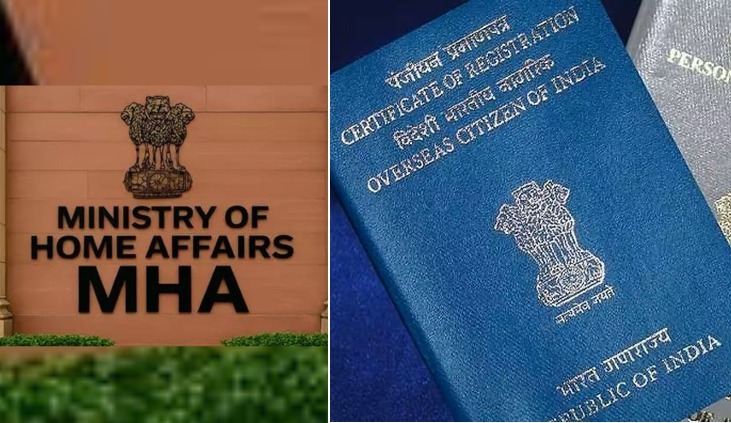
Under the amended provision introduced via clause (da) of Section 7D of the Citizenship Act, 1955, an OCI cardholder’s status will be revoked if they are sentenced to imprisonment for two years or more. Additionally, OCI status will be subject to cancellation if the individual is named in a charge sheet for an offence that carries a punishment of seven years or longer. This marks a shift towards stricter enforcement of legal standards, extending scrutiny to those facing serious charges even before conviction.
The OCI scheme, launched in August 2005, offers persons of Indian origin living abroad visa-free entry to India along with multiple-entry and long-term residency benefits. Eligibility is granted to individuals who were Indian citizens on or after January 26, 1950, or those who were eligible for citizenship on that date. However, the scheme excludes citizens or former citizens of Pakistan, Bangladesh, and other nations notified by the central government.
This tightening of rules comes amid broader efforts to ensure that OCI holders adhere to a higher standard of conduct. The inclusion of charge-sheeting as grounds for cancellation has drawn attention, with legal experts cautioning about potential due process concerns since formal charges precede a court’s final decision.
The new policy will particularly affect OCI cardholders involved in serious offences such as financial fraud, organised crime, or other significant breaches under Indian law. By reinforcing accountability, the government aims to maintain the integrity of the OCI status and its benefits.
Notably, this is not the first major amendment to the OCI framework. Earlier revisions in 2021 introduced further restrictions, requiring OCI holders to obtain permits to enter certain protected regions of India like Jammu & Kashmir and Arunachal Pradesh. The 2021 changes also aligned OCI cardholders’ rights more closely with foreign nationals under the Foreign Exchange Management Act, reversing some previous economic and educational privileges once accorded to them, bringing their status closer to that of foreign nationals rather than Non-Resident Indians (NRIs).
Currently, the OCI program has over 4.5 million registered cardholders globally, with large populations in the United States, United Kingdom, Australia, and Canada. This latest notification reflects the government’s intent to maintain strict oversight and uphold the prestige of the OCI status amid evolving legal and security considerations.