Australian artist Peter Drew, whose distinctive AUSSIE posters have become one of the country’s most recognisable public art projects, will bring the series together in a free outdoor exhibition at the Australian National Maritime Museum from 28 August 2026.
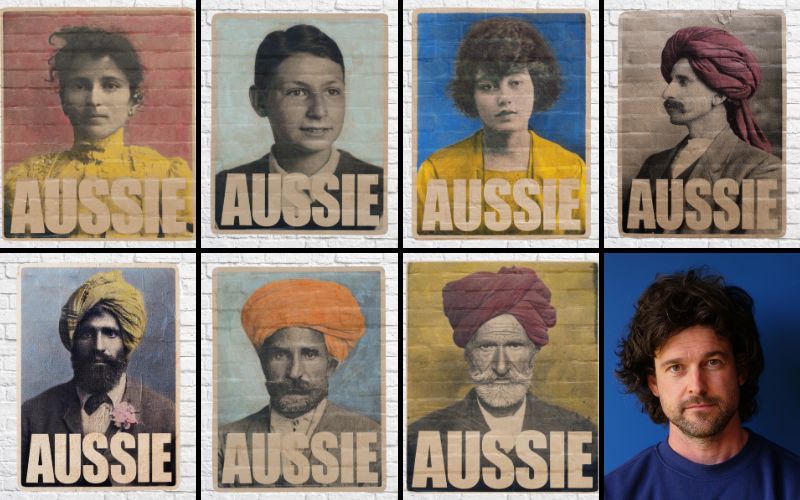
Presented at the museum’s Wharf 7 forecourt, the exhibition, titled AUSSIES, invites visitors to reflect on Australian identity, belonging and the migration stories that have shaped the nation.
The artist behind AUSSIE
Peter Drew is an Australian artist known for exploring themes of identity, nationalism, memory and belonging through public art.
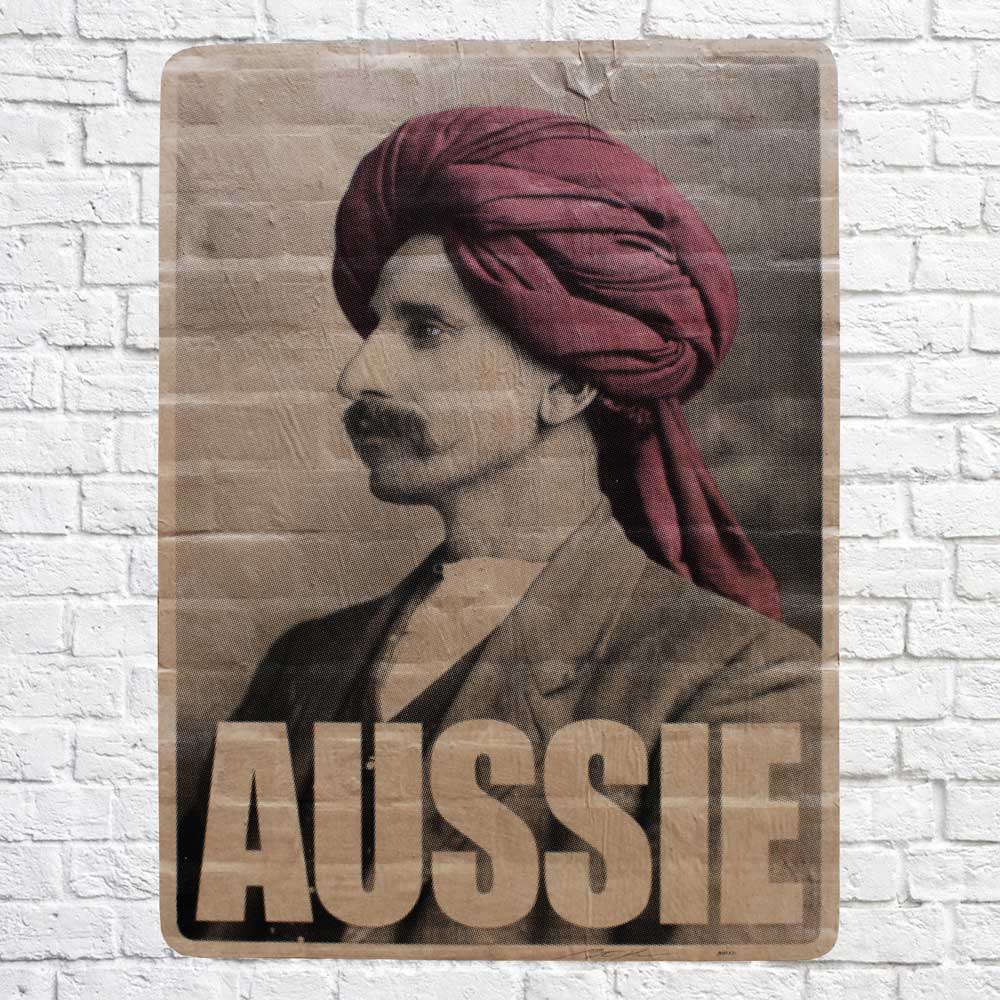
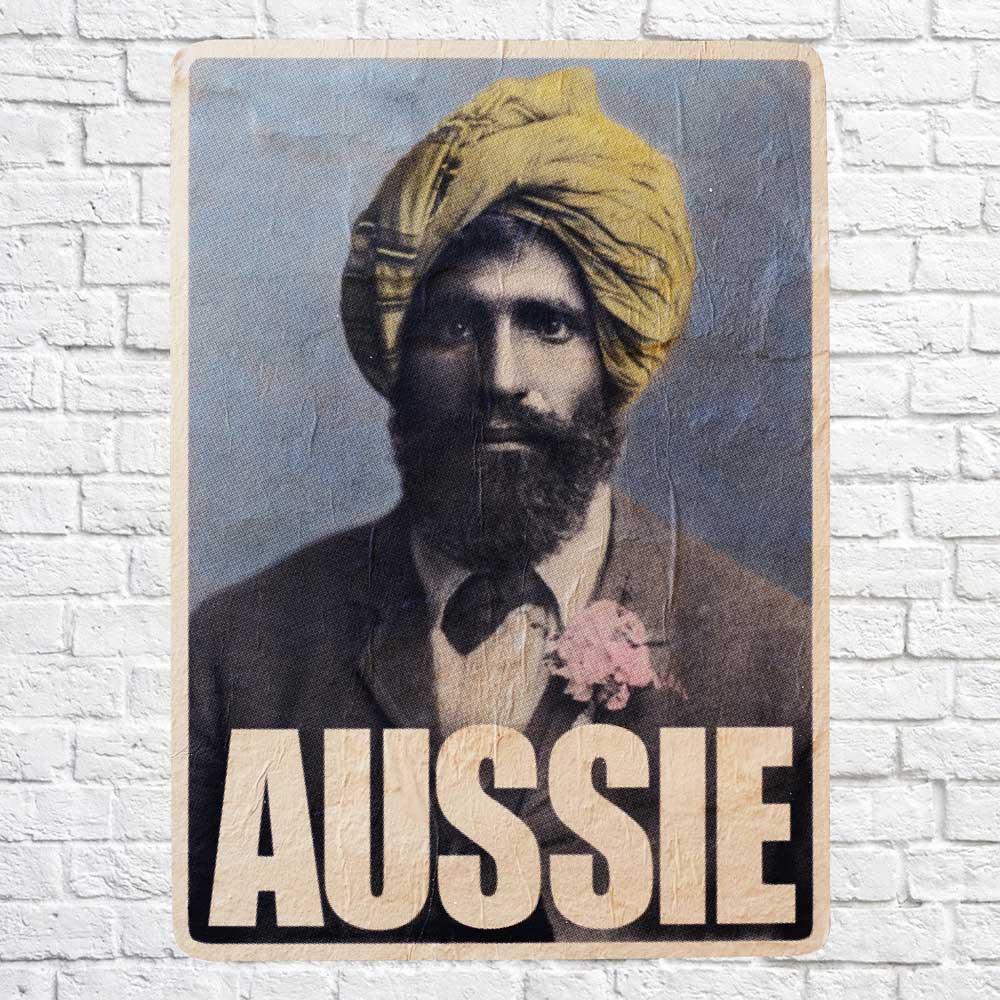
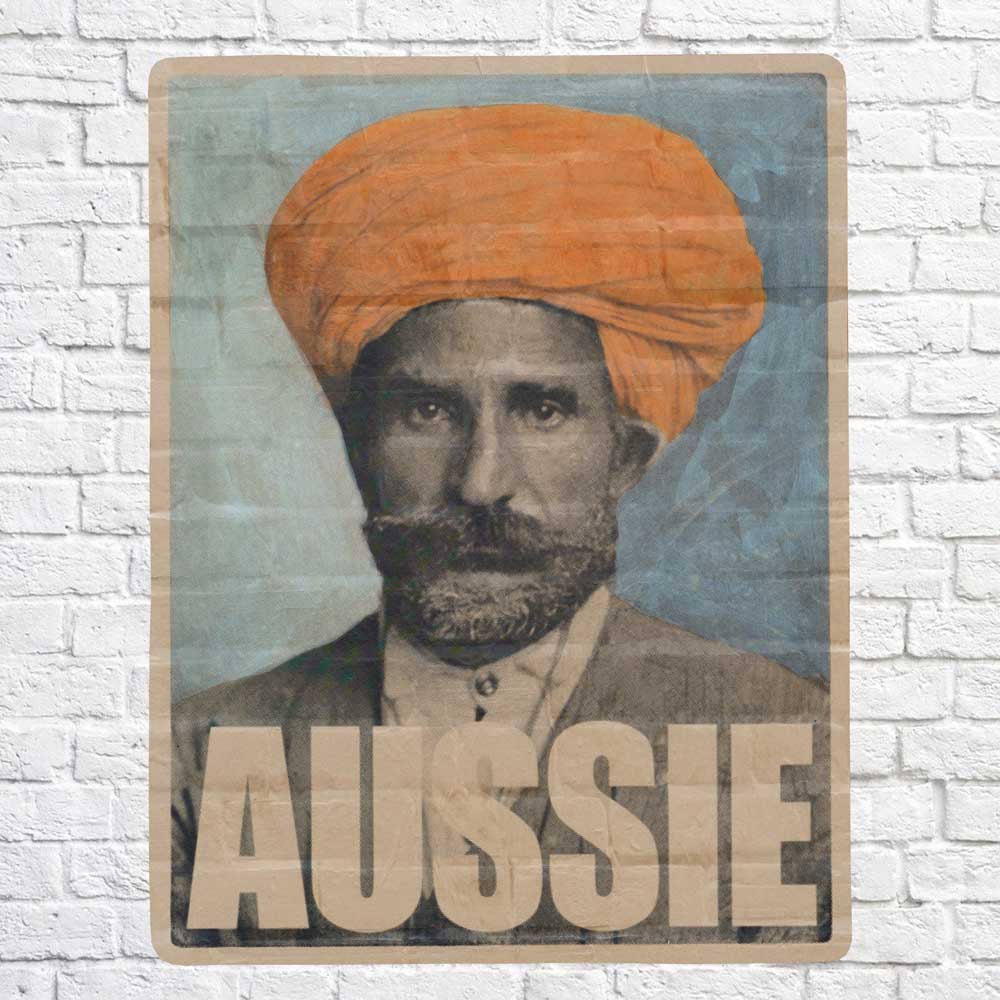
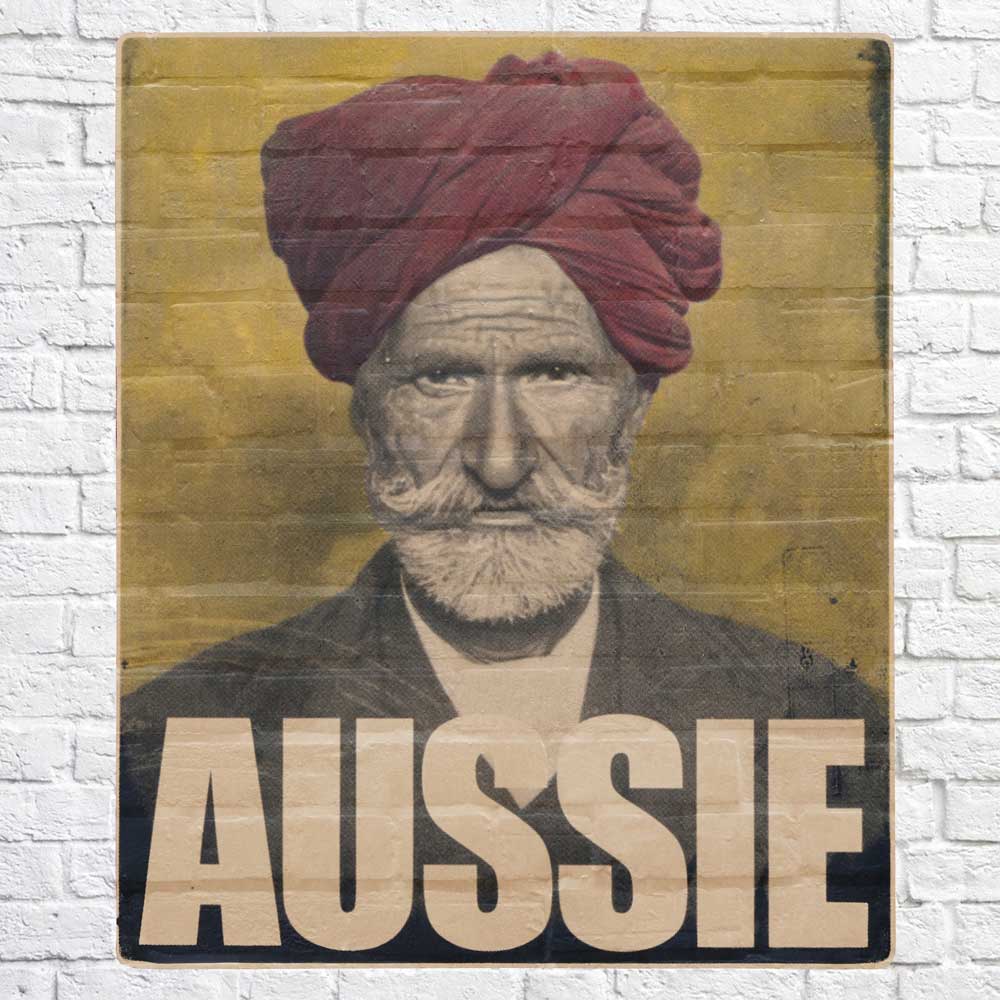
His AUSSIE series places archival portraits of culturally diverse people alongside the word “AUSSIE”, creating a deliberately simple but powerful challenge to conventional ideas about who is recognised as part of Australia’s national story.

The series began in 2016, and Drew’s posters have since appeared in public spaces across Australia. Rather than presenting migration as a recent chapter in the nation’s history, the works draw attention to people from culturally diverse backgrounds who were already living, working and contributing to Australia generations ago.
The Australian National Maritime Museum acquired Drew’s AUSSIE poster series in 2016, adding the works to its National Collection.

Drew said the purpose of the project was ultimately about encouraging people to see themselves in others.
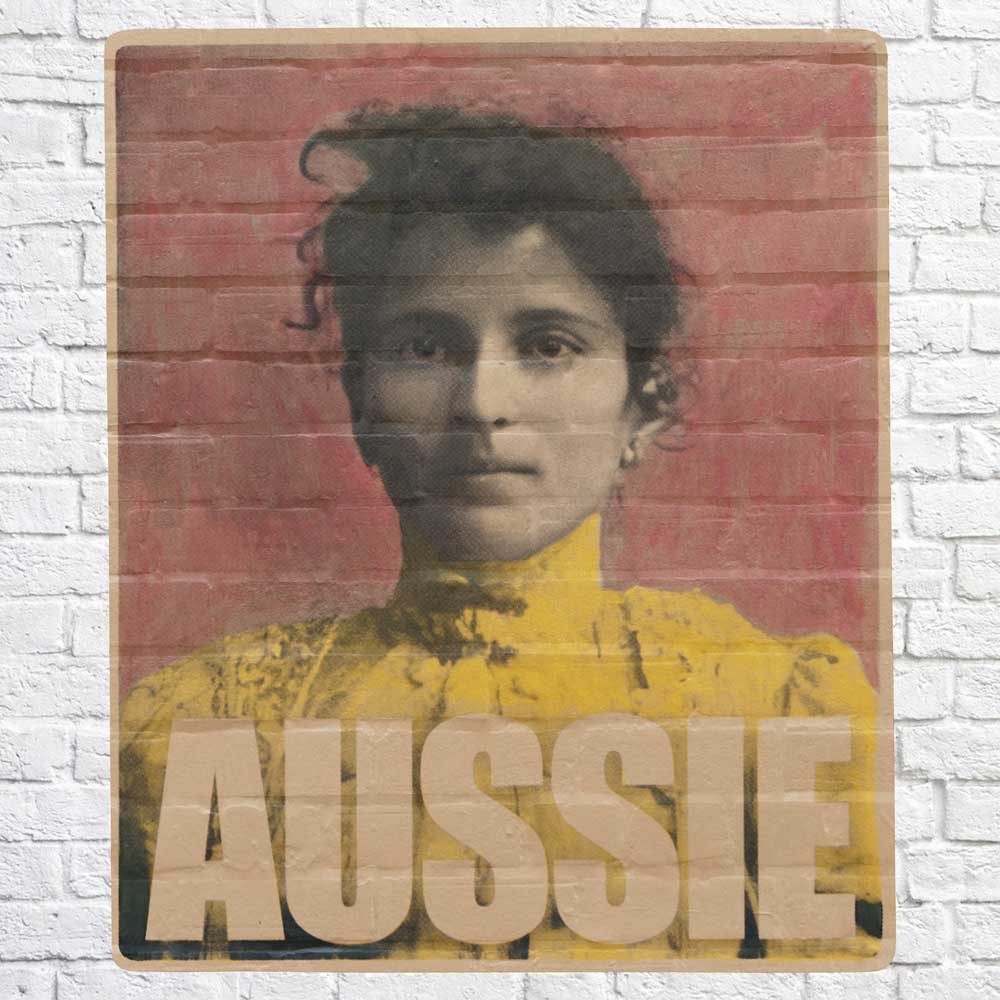
“Ultimately the posters are an opportunity for people on the street to identify with the people in the posters. When we gaze upon the other and feel their gaze returned, we recognise ourselves within the other and, for a moment, all boundaries dissolve. That’s my aim,” Drew said.
Monga Khan and Australia’s South Asian history
One of the most recognisable faces associated with Drew’s AUSSIE project is Monga Khan, a Muslim hawker who arrived in Australia in the late nineteenth century.
Khan’s image became central to Drew’s early campaign and helped draw attention to the often overlooked histories of cameleers, hawkers and traders from regions including India, Afghanistan and what is now Pakistan, many of whom played important roles in Australia’s developing economy and inland communities.
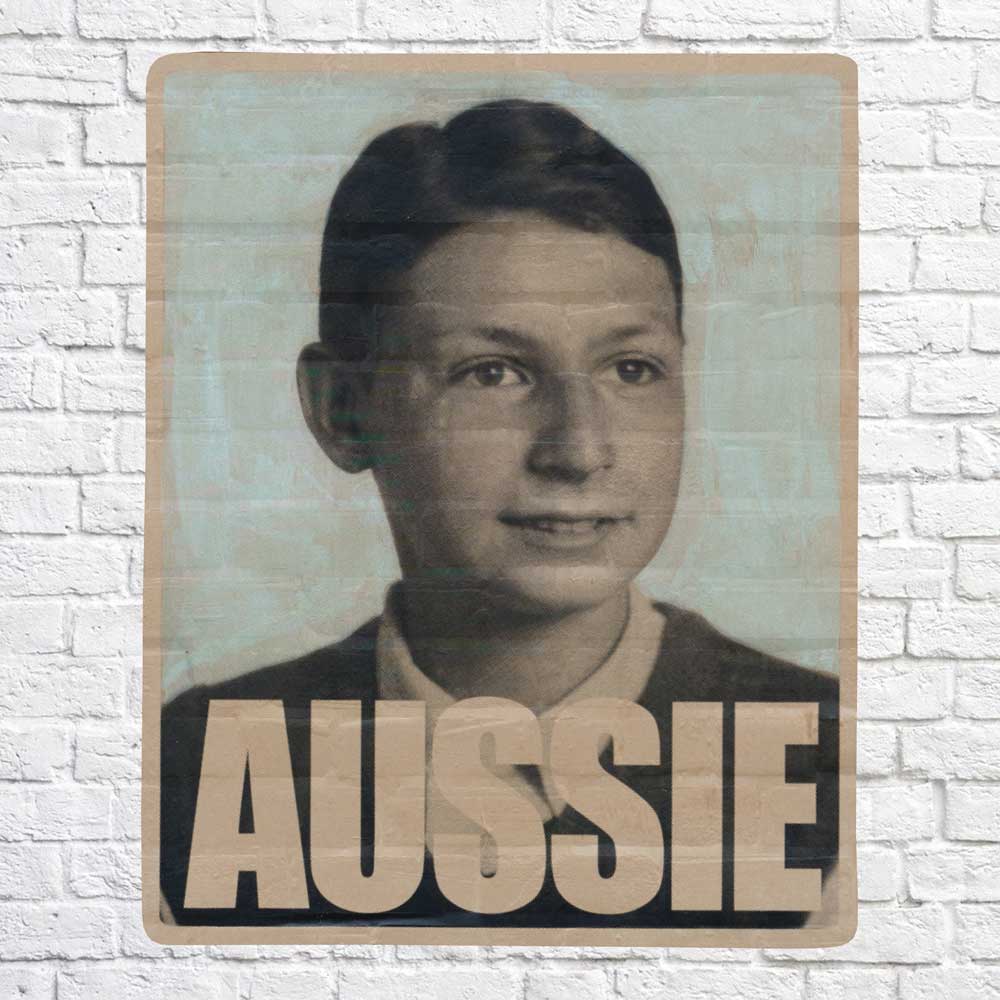
Their stories provide an important reminder that South Asian and other culturally diverse communities have been part of Australia’s history for far longer than is sometimes recognised.
By placing portraits such as Khan’s beneath the word “AUSSIE”, Drew’s work encourages audiences to reconsider narrow ideas of national identity and acknowledge the broader range of people who helped shape Australia.
The history behind the portraits
Many of the archival portraits used in Drew’s works are connected to people who lived in Australia during the period of the White Australia Policy, when restrictive immigration laws significantly limited non-European migration.
Some people who had already established lives in Australia required official exemption documents before travelling overseas so they could return without being subjected to discriminatory immigration restrictions.
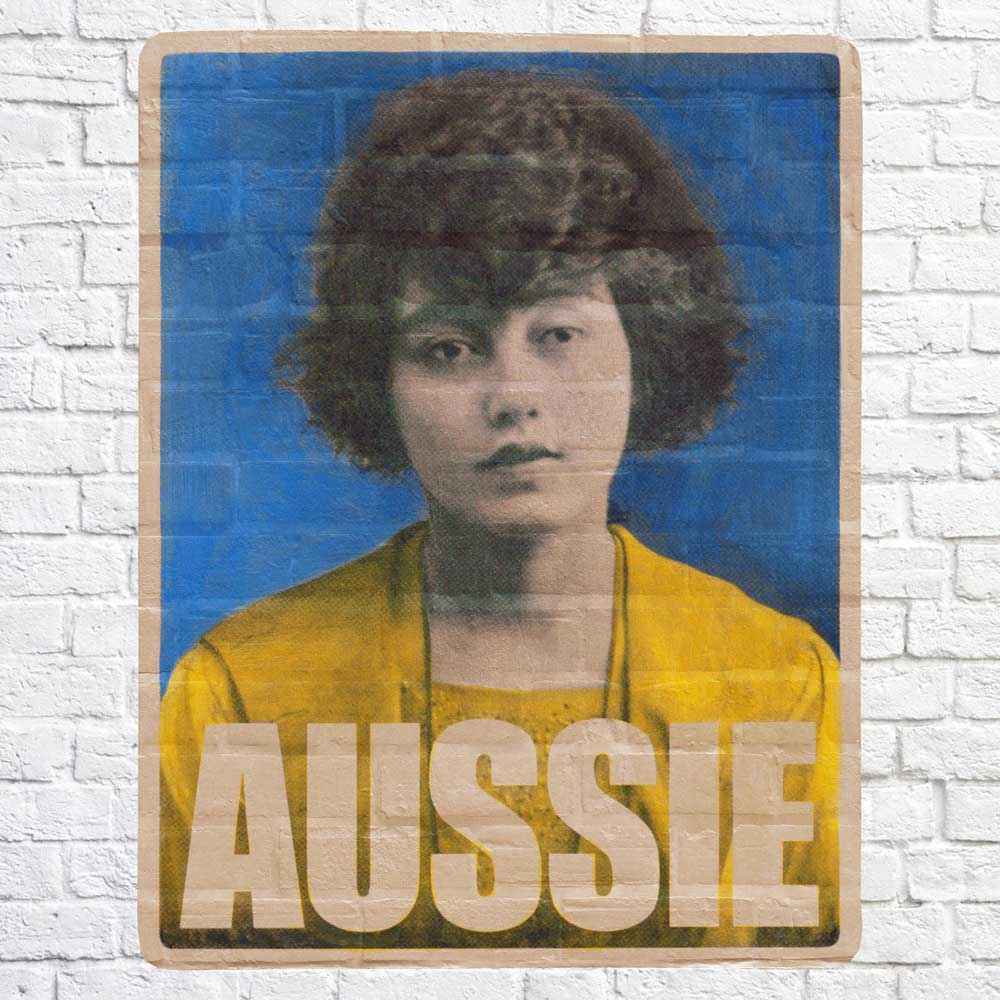
Drew’s work transforms these historical records into something far more immediate.
Instead of seeing the people represented simply as names in immigration files or archival documents, audiences encounter their faces and are invited to consider their individual stories, experiences and place within Australian history.
Why the Maritime Museum is presenting AUSSIES
Migration is one of the Australian National Maritime Museum’s key areas of focus.
Through exhibitions, collections and public programs, the museum examines the journeys that have connected people to Australia by sea and the ways those journeys continue to shape the country’s multicultural society.
Australian National Maritime Museum Director and CEO Daryl Karp AM said Australia’s multicultural character was fundamental to the nation.
“Australia’s multicultural make up is fundamental to who we are and how we live,” Ms Karp said.
“As the national maritime museum, we tell stories of movement, migration and connection, stories that remind us that Australia has always been shaped by people arriving, settling, contributing and belonging.
“Peter Drew’s AUSSIE posters are powerful because they make a simple but profound statement about who we recognise as part of the Australian story.”
Ms Karp said migration was also often driven by hope.
“We know that no one leaves their country of birth on a whim. Migration is almost always an act of hope: hope for safety and security, hope for opportunity, hope for education, hope for a better life for children and family,” she said.
“That journey of hope is what binds migrant stories together, whatever the place of departure or arrival.”
Art in a shared public space
The exhibition has deliberately been placed outside the traditional gallery environment.
Installed at the museum’s Wharf 7 forecourt, the works will be free and accessible to the public, creating an opportunity for people to encounter Drew’s portraits in an open, shared setting.
Ms Karp said presenting the exhibition outdoors was an important part of encouraging broader conversations about multiculturalism, identity and inclusion.
“We are presenting this exhibition outdoors and free to the public because these are conversations that belong in shared public space,” she said.
“Positioned adjacent to the National Monument to Migration, the posters invite visitors to consider the personal journeys and collective histories that have helped shape contemporary Australia.
“We want to foster respectful dialogue around identity and inclusion, and to encourage visitors to reflect on the diverse stories that have helped create contemporary Australia.”
The location beside the National Monument to Migration adds another layer of meaning to the exhibition, connecting the individuals portrayed in Drew’s work with the wider experiences of generations of migrants who have made Australia home.
A continuing conversation about who belongs
More than a decade after Drew began placing AUSSIE posters on Australian streets, the questions raised by the project remain highly relevant.
Who is recognised as Australian? Whose stories are included in the national narrative? And how does a country shaped by migration understand belonging?
For multicultural communities, the exhibition offers an opportunity to see Australia’s migration story not as something separate from national identity, but as central to it.
By bringing archival faces into contemporary public space, Drew’s AUSSIE series encourages audiences to look beyond stereotypes and recognise that the story of Australia has long been shaped by people arriving from different parts of the world, building lives, contributing to communities and creating a shared sense of belonging.
AUSSIES opens at the Australian National Maritime Museum on 28 August 2026 at the museum’s Wharf 7 forecourt. Entry is free.