More than 1,000 women leaders from across the globe have come together to discuss some of the world’s most pressing challenges at the Global Women’s Peace Forum, highlighting the growing role of women in shaping sustainable peace and inclusive communities.
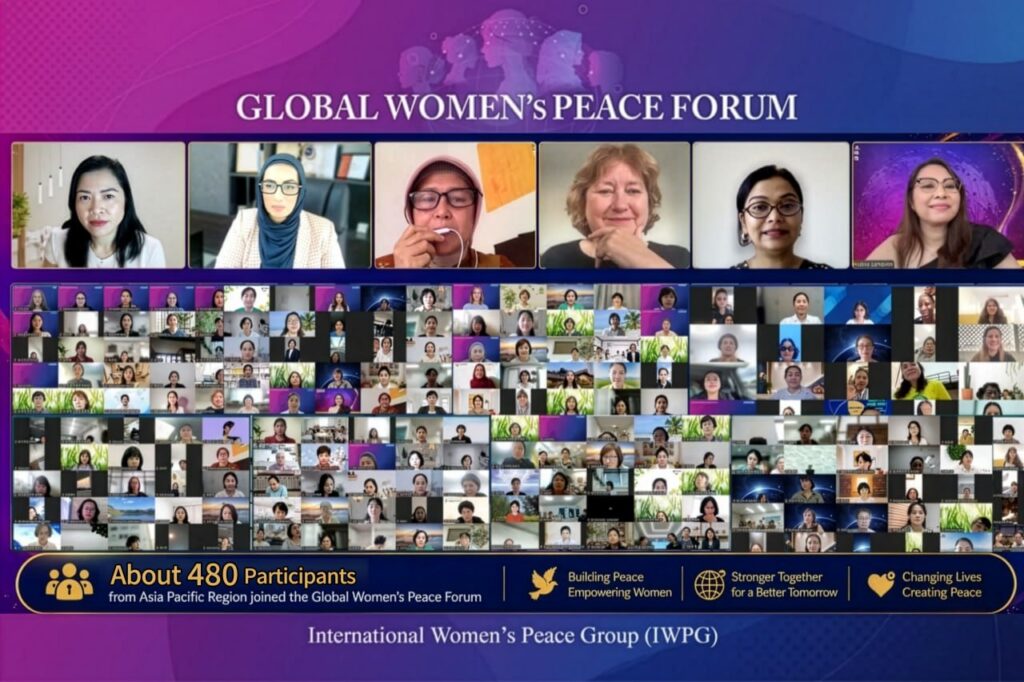
Hosted by the International Women’s Peace Group (IWPG), the two-day online forum brought together 1,067 participants representing four global regions-Asia-Pacific, Africa and Europe, the Americas, and South Asia and the Middle East. The event served as a preparatory meeting ahead of the 2026 International Women’s Peace Conference, which will be held in the Republic of Korea this September.
Discussions from the forum will contribute to the Global Women’s Peace Recommendations 2026, which are expected to be formally presented during the international conference.
The Asia-Pacific session focused on the region’s increasingly complex and interconnected challenges, including gender inequality, social inclusion, migration, community resilience and the role of women in peacebuilding.
Carole Shaw, Director of International Access Networks and Chief Executive Officer of UN Asia Pacific Women’s Watch, spoke about the importance of viewing peace through a human rights lens rather than solely through traditional military or political frameworks.
She emphasised that peace is not something that is only negotiated after conflict occurs but is shaped by the decisions societies make long before violence or instability emerges.
The forum also highlighted the structural barriers that continue to limit women’s participation in leadership and decision-making roles. Melanie Lambino, Director of the National Federation of Women’s Clubs of the Philippines, stressed that equality, justice, safety and understanding are fundamental components of lasting peace and that women’s voices remain essential in achieving these outcomes.

Several speakers presented perspectives that broadened the understanding of peace beyond international diplomacy and conflict resolution.
Kanakagiri Yashaswini of India spoke about the importance of mental wellbeing and emotional regulation, arguing that inner peace and individual wellbeing are critical foundations for building peaceful societies.
Drawing on her lived experience as an Afghan refugee, Mujgan Tahery, Founder and CEO of Uniting Circle Multicultural Community Centre, highlighted the need to recognise refugee and migrant women as leaders and active contributors to peacebuilding efforts rather than viewing them solely as survivors of conflict and displacement.
Dr Huong Nguyen, a lecturer and researcher at La Trobe University in Australia, addressed the challenges many migrant women face when settling in new countries. She pointed to issues such as the non-recognition of overseas qualifications and unequal caregiving responsibilities as barriers to social inclusion and emphasised that a sense of belonging is fundamental to achieving sustainable peace.
Representatives from Myanmar and Indonesia also shared experiences from their respective communities, highlighting the importance of connecting local women’s voices to international peace initiatives and strengthening women’s participation in disaster preparedness and community leadership.
One of the key themes that emerged throughout the forum was the idea that local challenges require locally informed solutions.
During breakout discussions, participants proposed a range of practical initiatives aimed at addressing issues affecting their communities. These included expanding women’s leadership training programs to prevent domestic and sexual violence, strengthening peace education for young people and creating support platforms for women experiencing violence.
Participants from Australia and the Philippines identified gender-based violence and youth violence as major concerns and called for greater investment in education and community support programs.
Another discussion group focused on multicultural and refugee women, identifying social inclusion and belonging as essential elements of peaceful and resilient communities. Participants also shared examples of community-based peace initiatives, including the establishment of peace libraries.
The forum further examined the growing impact of misinformation and online disinformation on democracy, social cohesion and public trust. Participants highlighted the need for stronger collaboration between governments, educators and communities to improve media literacy and strengthen peace education.
International Women’s Peace Group President Na-young Jeon emphasised the importance of listening to women who are directly experiencing the challenges faced by their communities.
She said sustainable peace can only be achieved when local realities are reflected in global decision-making processes and stressed that women are often best placed to identify both the problems and the solutions within their communities.
The Global Women’s Peace Forum forms part of IWPG’s ongoing international efforts to promote peace through women’s leadership, education, advocacy and international cooperation.
Working alongside governments, international organisations and civil society groups, the organisation aims to strengthen women’s participation in peacebuilding initiatives while fostering greater global collaboration and understanding.
As preparations continue for the 2026 International Women’s Peace Conference in South Korea, the recommendations developed during the Global Women’s Peace Forum are expected to contribute to international discussions on how women can play a greater role in building more inclusive, resilient and peaceful societies around the world.