Three Canberra women – Dr Sujatha Shanmugasundaram, Jasmine Sharma and Kamala Sharma-Wing – are among the 11 finalists selected for the 2026 ACT Women’s Awards, with their work spanning healthcare, multicultural participation, sport, faith and service. Their recognition comes under a refreshed awards program designed to acknowledge people creating meaningful and lasting change across the ACT and beyond.
The three finalists have followed markedly different professional paths, but their stories share a focus on helping others. Dr Shanmugasundaram has spent decades working across nursing, aged care, dementia, palliative care and education; Sharma has used cricket to build confidence and connections among culturally diverse women; while Sharma-Wing has combined military service with pastoral care and Hindu chaplaincy.
Dr Sujatha Shanmugasundaram: A Career Built Around Better Care
Dr Sujatha Shanmugasundaram is being recognised for her contribution to nursing education and gerontology, particularly her work strengthening approaches to dementia and aged care. Her professional experience spans clinical practice, teaching, research and leadership, with the University of Canberra noting that she has worked across acute care, aged care and palliative care for almost 35 years.

Her motivation has been shaped by experiences caring for older people and those living with dementia, particularly toward the end of life. She has spoken about the importance of looking beyond medical treatment to consider dignity, comfort, quality of life and the needs of families. That perspective has informed her work in person-centred care, research, education and professional advocacy.
Shanmugasundaram also serves as an ACT leadership representative with the Australian College of Nursing. Her professional work has included supporting nurses, mentoring emerging practitioners and encouraging greater use of research in everyday healthcare. She has said that one of the most rewarding aspects of her career has been seeing students and younger nurses develop confidence and eventually take on leadership roles themselves.
Jasmine Sharma: Using Cricket to Create Community Connections
For Jasmine Sharma, cricket has become a pathway to much more than sporting participation. She founded Kitchen to Crease through her volunteer involvement with the Indian Australian Multicultural Sports Association, creating opportunities for South Asian women to become involved in cricket and develop stronger connections with the wider community. The initiative began around nine years ago and has since reached more than 100 women and children.

Sharma’s work addresses barriers that can prevent women from participating in organised sport, including family responsibilities, cultural expectations, limited opportunities and uncertainty about where to begin. Some participants had little or no experience with cricket before joining. Through coaching, social matches and a welcoming environment, the initiative has helped some participants progress into structured and grade cricket.

The impact has also extended to younger generations. Sharma has highlighted how children, including girls, have become interested in cricket after seeing their mothers participate. Her approach reflects a wider belief that sporting activity can strengthen confidence, wellbeing, friendships and belonging, particularly for people who may initially find it difficult to establish community connections after moving to Australia.
Her contribution has previously received recognition from Cricket ACT, which named Kitchen to Crease its Women and Girls Initiative of the Year for 2024-25. The award recognised the program’s work in creating female-focused sporting opportunities and expanding participation. Her selection as an ACT Women’s Awards finalist now brings that community work into a broader platform.
Kamala Sharma-Wing: From Navy Officer to Hindu Chaplain
Kamala Sharma-Wing has taken a different route to recognition, combining a long Australian Defence Force career with religious and pastoral service. In early 2025, she became the ADF’s first full-time Hindu chaplain in Service Category 7, marking a significant development in the organisation’s multi-faith representation. She is based at HMAS Harman and supports personnel from a wide range of backgrounds.
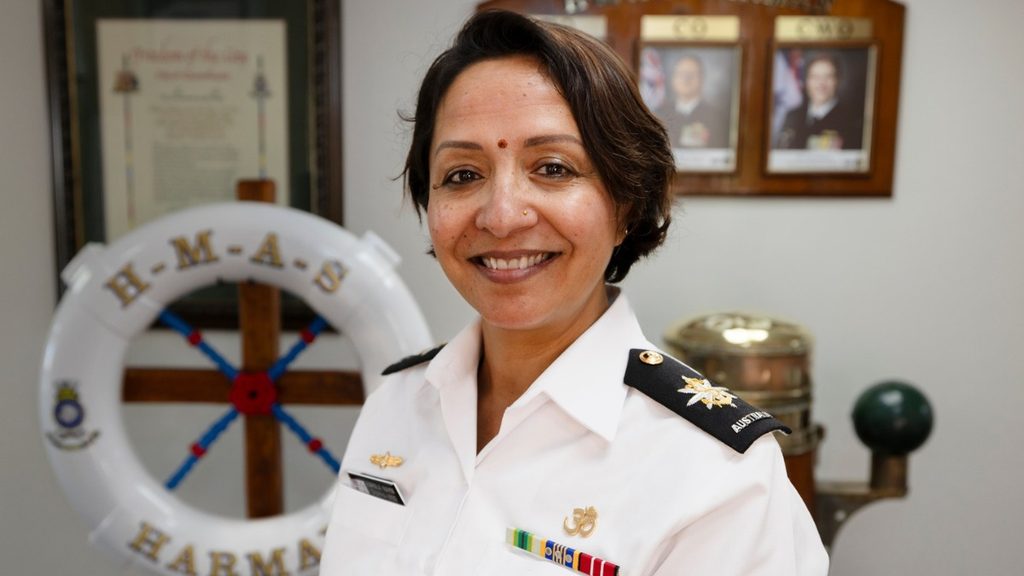
Her connection with Defence stretches back more than three decades. After moving from Nepal to Australia as a teenager, she joined the Navy in 1995 and later served as a maritime logistics officer. Her transition towards chaplaincy began after a leadership program in 2016 prompted conversations about the possibility of establishing a Hindu chaplaincy role within Defence.
Sharma-Wing subsequently undertook extensive preparation for the position, including a Master of Counselling, Hindu studies, training as a Hindu priestess, yoga teacher accreditation and pastoral placements. She was ordained as a Hindu priestess in November 2024 before commencing her chaplaincy role in January 2025.
Her current work goes beyond religious observance. At HMAS Harman, she provides pastoral support, crisis assistance, ethical guidance and wellbeing activities, while also working with personnel from different faiths and backgrounds. Defence has highlighted her role in strengthening resilience, cohesion and a sense of belonging across the workforce.
Three Different Paths, One Canberra Story
The recognition of Shanmugasundaram, Sharma and Sharma-Wing illustrates the breadth of the 2026 awards. Their contributions range from healthcare and professional education to grassroots sport and military chaplaincy, showing how community impact can emerge through very different careers and forms of service. The ACT Government has redesigned the awards around the nature of a person’s contribution rather than previous age-based categories.
The 2026 program includes the Excellence in Industry, Lifetime Achievement, Gender Equity and Social Change, and Minister’s Impact awards. Assessment considers factors including lasting impact, leadership, innovation, role-modelling and contributions to equity or inclusion where applicable. The ACT Government received 41 nominations across the three publicly nominated categories, with some people considered in more than one category.
The winners will be announced at the 2026 ACT Women’s Awards ceremony on 3 September, which will also recognise new inductees to the ACT Women’s Honour Roll. For the Canberra Indian and wider multicultural community, the presence of Sharma and Sharma-Wing is particularly significant, while Shanmugasundaram’s recognition highlights the contribution of healthcare professionals and educators.
For all three finalists, the awards provide an opportunity to draw attention to work that has developed over years rather than overnight. Whether improving care for older Australians, opening sporting opportunities for culturally diverse families or strengthening inclusion within Defence, their journeys demonstrate the different ways people can contribute to a stronger and more connected Canberra.